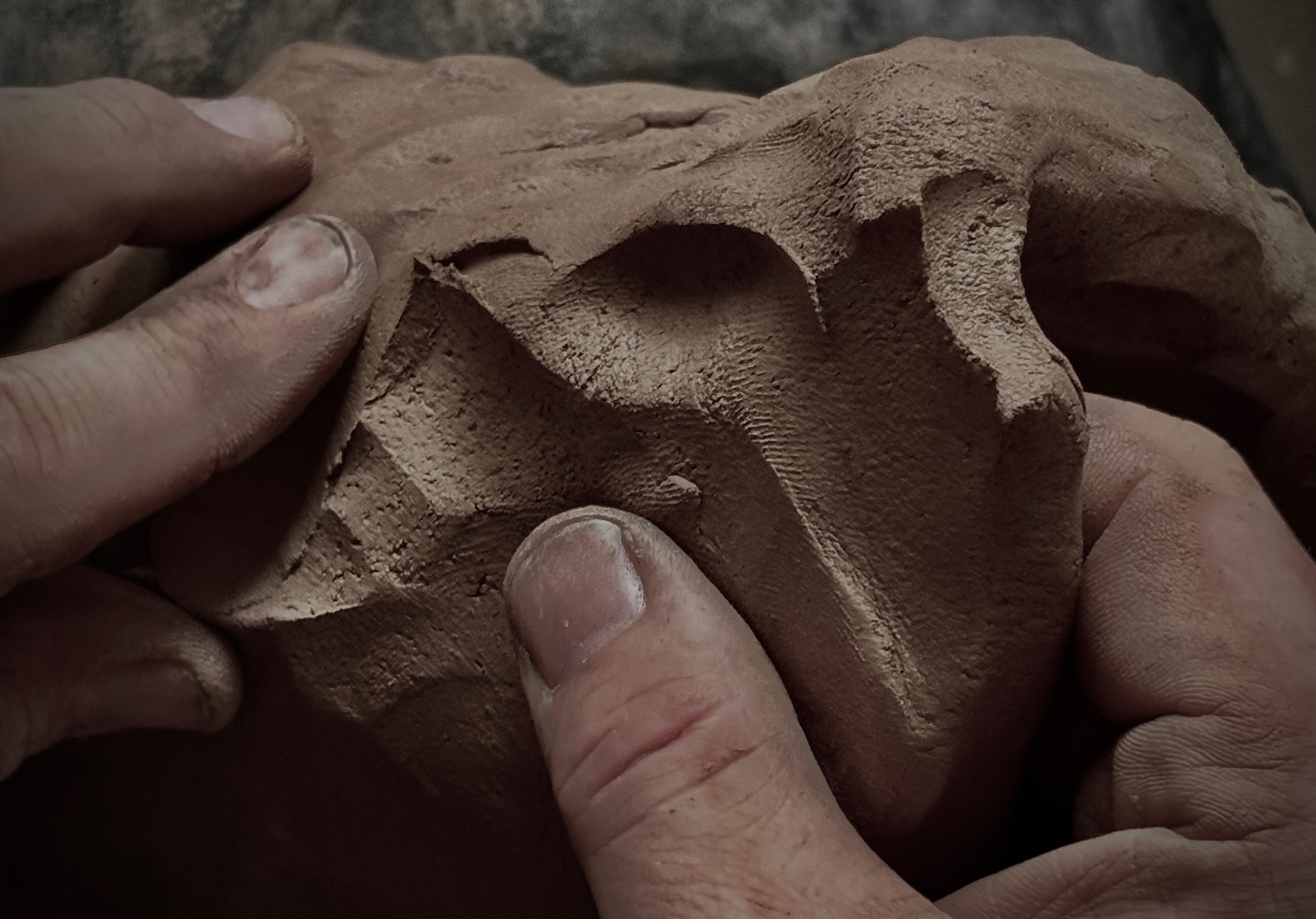
tsuchi — earth · soil · clay
In Japanese, tsuchi means the earth beneath our feet — the soil, the ground, the living clay from which all things are formed and to which all things return. It is at once humble and sacred: the matter of farmland and forest floor, of riverbed and mountain, of the bowl in your hand and the field that fed you this morning.
For centuries, Japanese makers have approached the earth with a quiet reverence — not as a resource to be conquered, but as a partner to be listened to. The potter does not impose a shape upon the clay so much as draw one out of it, guided by what the material is willing to become. Mottainai — the refusal to waste — and shinrin, the spirit of the forest, are not philosophies practiced in the studio. They are the air the studio breathes.
To name a practice Tsuchi is to make a promise: that the work begins and ends with the earth. That each vessel carries with it the memory of the ground it came from. That we are not creators, but custodians — granted, for a moment, the privilege of shaping what nature has spent millennia preparing.
The clay remembers. The fire decides. We are only here to listen.

We works unrestrained, and with a expermential Japanese–Scandinavian approach.
The practice sits between two quiet traditions — the Japanese discipline of raku, anagama and wabi-sabi, and a Scandinavian instinct for restraint, material honesty and the soil underfoot. There is no rulebook and no production line. Each vessel is made by hand, in the moment, with no allegiance to anything but the clay.
Firing is left uncontrolled. The kiln is opened to flame, smoke, ash and accident, and whatever the fire decides is final. Cracks, scorches, metallic blooms and fissures are not flaws to be corrected — they are the signature of the work, and the reason the work exists at all.
What emerges is unrepeatable: one-of-a-kind objects shaped as much by the maker as by the elements. Works are held in private collections across Scandinavia, the UK and Japan. Commissions are accepted on a limited basis.